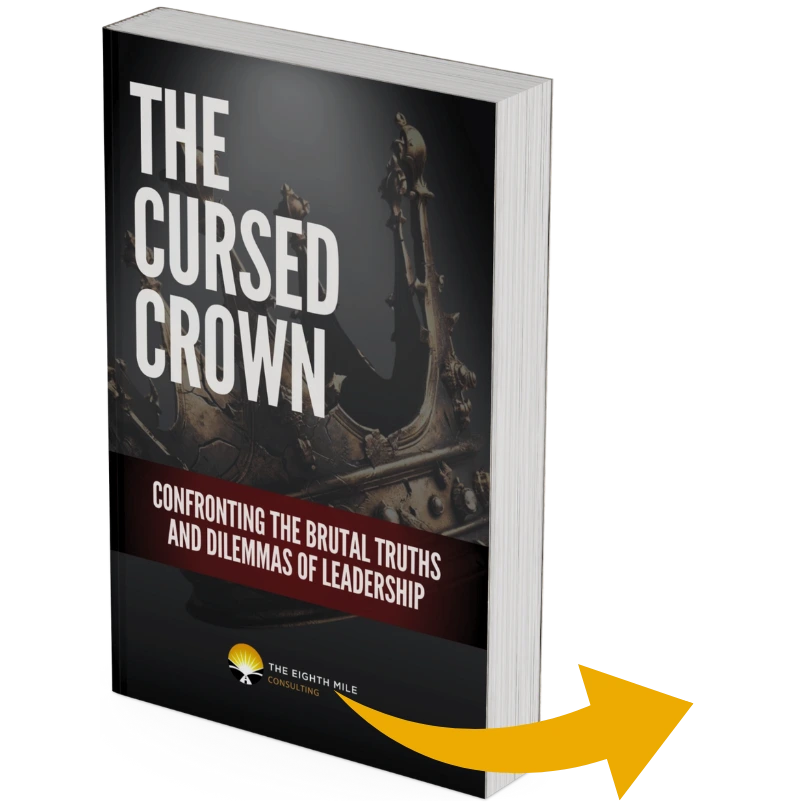
Hard-learned leadership lessons from both the military and the corporate world
Instilling confidence in leaders to wilfully walk into chaos
But decisions still have to be made and they will carry consequences.
The question leaders face is not simply what is happening, but what it means for their teams, and what must happen next.
Organisations which perform best in uncertain environments are not necessarily those with the best plans on paper.
The Crisis Readiness Group (CRG) draws on disciplines used in the military where leaders are trained to operate under pressure and make decisions amid constant uncertainty and high stakes.
In unstable environments, organisations often try to solve too many problems at once. The result is diluted effort and slow progress.
CRG helps leadership teams establish clear operational priorities, ensuring effort and resources are focused on what matters most when conditions are changing.
Not every decision should happen at the same time. Effective leadership often comes down to what must happen first, second and third.
CRG introduces structured decision sequencing, enabling leadership teams to prioritise action and move through complex problems with clarity and momentum.
Every plan rests on a series of assumptions about how the environment will behave. When those assumptions change, the plan must change too.
CRG strengthens contingency planning capability by helping leaders to identify critical assumptions and prepare alternative courses of action before conditions shift.
In uncertain environments, centralised control slows organisations down.
CRG helps leaders create initiative by setting clear intent and defined boundaries, allowing people to make decisions based on impact, not permission.
The result is faster, more aligned action at the level where the work is actually happening.
In crisis environments, influence becomes more important than control.
CRG helps leaders maintain influence through clarity of message, visible leadership and consistency of action, even as conditions change.
This keeps teams focused, aligned and moving forward under pressure.
Together we work through rapid planning cycles, both at large, and in smaller breakout teams, to answer the “so what” of the situation your organisation faces.
External events rarely arrive with clear instructions attached. Markets shift, supply chains tighten, geopolitical tensions rise. But the real question is what those signals mean for your organisation specifically.
CRG helps leadership teams interpret external developments quickly and translate them into clear organisational implications, rather than waiting for perfect clarity.
When conditions change, continuing with the same priorities can quietly push organisations in the wrong direction.
CRG works with leadership teams to reassess strategic priorities and operational focus, ensuring effort and resources shift quickly toward what matters most in the new environment
Insight alone is not enough. Many organisations recognise the problem but struggle to move from analysis to action.
CRG helps leadership teams determine what decisions must be made, what actions must follow, and who must move first, ensuring strategy translates into coordinated operational execution.
CRG is not a traditional consulting engagement. The focus is not on producing reports or recommendations. CRG brings together a team of former military leaders with decades of operational leadership experience in complex, high-pressure environments who will help organisations build leadership capability across all organisational levels.
Most organisations have crisis plans. Far fewer have leadership teams that are truly prepared to execute them under pressure.
CRG strengthens organisational crisis readiness by helping leaders identify vulnerabilities, pressure-test assumptions and build disciplined preparation before disruption arrives.
Strategy often focuses on the most likely scenario. Contingency planning focuses on what happens when reality behaves differently.
CRG develops structured contingency thinking, enabling leadership teams to anticipate multiple pathways and respond decisively when conditions change.
In unstable environments, perfect information rarely arrives on time. Waiting for it can be the most dangerous decision of all.
CRG strengthens leadership decision-making under pressure, helping teams prioritise clearly, sequence actions and move from analysis to action when the stakes are high.
Periods of disruption often expose fractures in leadership alignment. Different interpretations of the situation lead to fragmented decisions.
CRG works directly with executive teams to establish clear priorities, shared intent and coordinated action when organisations need it most.
Strategy alone rarely survives contact with a fast-moving environment. Execution is where most plans fail.
CRG helps organisations translate strategic intent into operational action, ensuring leadership decisions flow clearly through the organisation and drive coordinated outcomes.
In crisis environments, inconsistent messaging creates confusion and slows decision-making.
CRG helps leadership teams develop clear, aligned messaging so that intent is understood and communicated consistently across the organisation. This ensures people know what matters, what is changing, and how to respond.
CRG is led by David Neal and Jonathan Clark who are among the most recognised voices in leadership development in Australia. Their work has been acknowledged through multiple industry awards and national recognition, reflecting their influence in shaping how leaders think about capability, decision-making and performance under pressure.
(07) 2114 9072
Drawn from lessons learned in the military, and in business, we make leadership principles tangible and relatable through real-world examples, personal anecdotes, and case studies.
© Copyright 2023 The Eighth Mile Consulting | Privacy